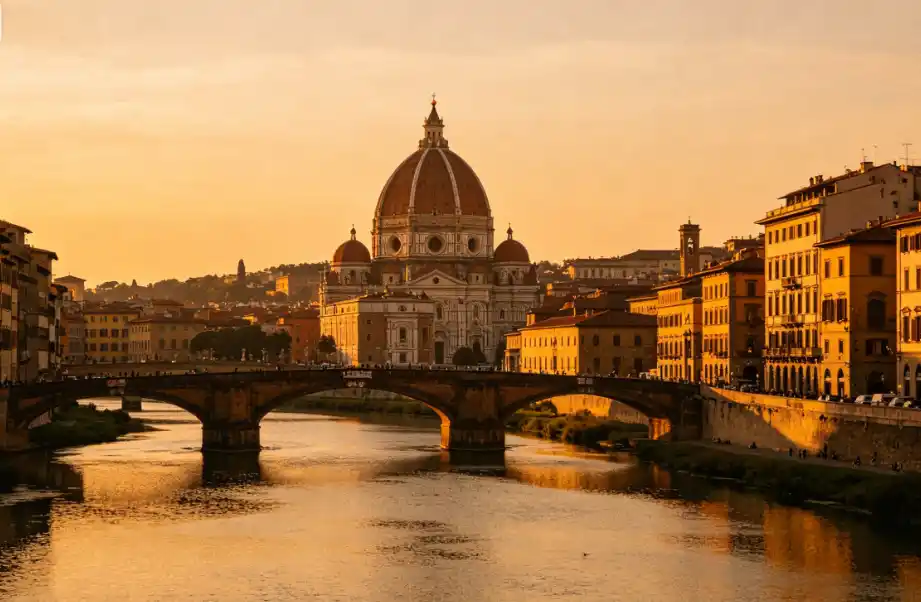
Nestled in the heart of Tuscany, Florence (Firenze in Italian) isn’t just a city—it’s a living, breathing masterpiece. For centuries, this compact yet extraordinary destination has captivated travelers with its unrivaled art, stunning architecture, rich history, and mouthwatering cuisine. As the birthplace of the Renaissance, Florence is where Michelangelo, Botticelli, and Leonardo da Vinci left their indelible marks, where medieval streets wind past grand palaces and cozy trattorias, and where every corner feels like a page torn from a history book. Whether you’re an art enthusiast chasing masterpieces, a food lover savoring Tuscan flavors, a history buff delving into medieval and Renaissance lore, or simply a traveler seeking la dolce vita (the sweet life), Florence offers an experience that lingers long after you’ve left its cobblestone streets.
This comprehensive guide is designed for European and American travelers looking to go beyond the tourist crowds and discover the real Florence. We’ll cover everything you need to know: from the must-see landmarks and hidden gems to practical tips on transportation, accommodation, dining, and etiquette. Whether you’re planning a 3-day weekend getaway or a week-long deep dive into Tuscan culture, this guide will help you make the most of your time in one of the world’s most beloved cities—while ensuring your content meets Google AdSense’s quality standards with original, valuable, and engaging information .
Why Florence? What Makes This City Irreplaceable?
Before we dive into the details, let’s answer the question: Why Florence? For travelers, accustomed to bustling metropolises or sun-soaked coastal towns, Florence offers something unique—a perfect blend of intimacy and grandeur. Unlike Rome’s sprawling size or Venice’s overcrowded canals, Florence is compact enough to explore on foot, yet packed with more world-class art and architecture than most cities twice its size. Here, you can wander from a 15th-century cathedral to a family-run gelateria in 10 minutes, or from a Renaissance palace to a quiet riverside park in 15. It’s a city where history isn’t just observed—it’s experienced: you’ll sip espresso in a café where Dante once sat, walk across a bridge that’s stood for 600 years, and gaze at artworks that defined an entire era.
For art lovers, Florence is Mecca. It’s home to Michelangelo’s David, Botticelli’s The Birth of Venus, and Leonardo’s early works—masterpieces that draw millions of visitors each year. For foodies, it’s a paradise of simple, flavorful Tuscan cuisine: succulent bistecca fiorentina, creamy ribollita, and gelato so good it’s considered a food group. For history buffs, it’s the story of the Medici family, the powerful banking dynasty that funded the Renaissance and turned Florence into a global center of art and culture. And for anyone seeking a break from the chaos of modern life, Florence offers a slower pace—a chance to sit in a piazza, watch the world go by, and embrace the Italian philosophy of savoring the moment.
When to Visit Florence: Best Times for Travelers
Choosing the right time to visit Florence can make or break your trip, especially if you want to avoid crowds, extreme weather, or inflated prices. Here’s a breakdown of the seasons, tailored to欧美 travelers’ preferences (many of whom prioritize mild weather and fewer crowds):
Spring (March–May): The Perfect Sweet Spot
Spring is widely regarded as the best time to visit Florence. The weather is mild (temperatures range from 10°C to 22°C / 50°F to 72°F), the flowers are in bloom (especially in the city’s gardens like Boboli and Giardino Bardini), and the crowds are manageable—before the summer rush hits. March is still a bit cool, but it’s a great time to visit if you want to avoid crowds and take advantage of lower hotel prices. April and May are ideal: the city comes alive with festivals (like the Florentine New Year on April 25th, a national holiday celebrating the city’s liberation from the Nazis), and the weather is perfect for walking and exploring outdoor attractions. For travelers, spring aligns with Easter breaks, making it a popular time—but it’s still less crowded than summer.
Summer (June–August): Warm Weather, Busy Crowds
Summer in Florence is hot and humid, with temperatures often reaching 30°C to 35°C (86°F to 95°F) in July and August. While the warm weather is great for riverside picnics and evening strolls, the crowds are at their peak—lines for the Uffizi Gallery and Accademia can stretch for hours, and popular piazzas like Piazza della Signoria are packed. Many locals leave the city for the coast in August, so some smaller shops and restaurants may close. That said, summer is a great time for outdoor events: open-air concerts in the Boboli Gardens, opera performances in Piazza della Repubblica, and night markets selling local crafts. If you visit in summer, plan to start your days early (before 9 AM) to beat the heat and crowds, and take a siesta in the afternoon when the sun is strongest.
Fall (September–November): Mild Weather, Harvest Season
Fall is another excellent time to visit Florence, especially for food and wine lovers. September and October offer mild temperatures (15°C to 25°C / 59°F to 77°F), fewer crowds than summer, and the added bonus of harvest season in Tuscany. This is when local wineries host tastings, and markets are filled with fresh grapes, figs, and chestnuts. November is cooler (10°C to 18°C / 50°F to 64°F) and may bring some rain, but it’s a great time to visit museums (without the summer lines) and cozy up in trattorias with a bowl of ribollita. For travelers, fall aligns with post-summer getaways and Thanksgiving breaks, making it a popular choice for those seeking a quieter experience.
Winter (December–February): Quiet, Cozy, and Festive
Winter in Florence is cold (temperatures range from 2°C to 12°C / 36°F to 54°F) and sometimes rainy, but it’s also the quietest time of year. Crowds are minimal, hotel prices are at their lowest, and the city takes on a cozy, festive vibe—especially in December, when Christmas markets pop up in Piazza Santa Croce and Piazza della Repubblica, and the Duomo is decorated with twinkling lights. January and February are the coldest months, but they’re perfect for art lovers: museums are nearly empty, so you can spend hours admiring masterpieces without crowds. Just be sure to pack warm clothes (layers are key!) and an umbrella. Note that some attractions may have reduced hours in winter, so check ahead before visiting.
Getting to Florence: Transportation Tips for Travelers
Florence is well-connected to major European and American cities, making it easy to reach by plane, train, or car. Here’s a breakdown of the best ways to get there, tailored to欧美 travelers:
By Plane: Fly to Florence or Pisa
Florence’s main airport is Amerigo Vespucci Airport (FLR), also known as Peretola Airport, located just 5 km (3 miles) northwest of the city center . It offers direct flights from major European cities like London, Paris, Berlin, Madrid, and Amsterdam, as well as seasonal direct flights from select American cities (like New York and Miami) via airlines like Alitalia, Delta, and American Airlines. From the airport, you can take a taxi (about 20 minutes to the city center, costing €20–€30), a shuttle bus (the Volainbus, which runs every 30 minutes to Santa Maria Novella train station, costing €6 one-way), or a rideshare service like Uber.
If you can’t find a direct flight to Florence, Pisa International Airport (PSA) is a great alternative. Located about 80 km (50 miles) from Florence, Pisa offers more international flights (including direct flights from the US). From Pisa Airport, you can take a train to Florence’s Santa Maria Novella station (about 1 hour, costing €10–€15 one-way) or a shuttle bus (about 1.5 hours, costing €15–€20 one-way). Many travelers choose to fly into Pisa and then take the train to Florence, as it’s often cheaper and offers more flight options.
By Train: Convenient and Scenic
Florence is a major hub in Italy’s train network, with direct trains from Rome (1.5–2 hours), Milan (2–2.5 hours), Venice (2.5–3 hours), and Naples (3–3.5 hours) . The main train station is Santa Maria Novella (SMN), located in the city center—just a 10-minute walk from the Duomo and Piazza della Signoria. For欧美 travelers coming from other European countries, you can take the high-speed train (like the Frecciarossa) from Paris, Zurich, or Munich to Milan, then transfer to a train to Florence. Train tickets are best booked in advance (via Trenitalia or Italo) to get the best prices—especially for high-speed trains. First-class tickets offer more comfort (larger seats, free snacks), but second-class is perfectly comfortable for most travelers.
By Car: Flexibility for Exploring Tuscany
If you plan to explore Tuscany beyond Florence (e.g., visit Siena, San Gimignano, or the Chianti wine region), renting a car is a great option. However, we do not recommend driving in Florence’s city center—the historic center is a ZTL (Limited Traffic Zone), where only residents and authorized vehicles are allowed . Parking is scarce and expensive, and the narrow cobblestone streets are difficult to navigate. Instead, rent a car and park it in a parking garage on the outskirts of the city (like Parking Fortezza da Basso or Parking Piazzale Michelangelo), then take public transportation or walk into the center. Most major car rental companies (Hertz, Avis, Budget) have offices at Florence’s airport and train station. Be sure to bring your driver’s license (an international driver’s permit is recommended for non-EU travelers) and check the rental company’s policies on tolls and insurance.
Getting Around Florence: Navigating the City Like a Local
Florence’s historic center is compact and pedestrian-friendly—most major attractions are within walking distance of each other. That said, there are a few transportation options if you need a break from walking:
Walking: The Best Way to Explore
Walking is hands down the best way to experience Florence. The city’s narrow cobblestone streets are lined with shops, cafes, and hidden gems that you’d miss if you take public transportation. From the Duomo to the Uffizi Gallery is just a 5-minute walk; from Piazza della Signoria to Ponte Vecchio is 10 minutes; and from Ponte Vecchio to Piazzale Michelangelo is 20 minutes (uphill, but worth the view). Be sure to wear comfortable walking shoes—cobblestones can be slippery, especially in the rain.
Public Transportation: Buses and Trams
Florence’s public transportation system is operated by ATAF and consists of buses and trams . Buses run throughout the city and into the suburbs, with routes covering all major attractions. The most useful bus routes for tourists are the C1 (which runs from Santa Maria Novella station to Piazzale Michelangelo), the C2 (which runs from the Duomo to the Boboli Gardens), and the 11 (which runs from the city center to the airport). Trams are newer and run from Santa Maria Novella station to the western suburbs, but they’re less useful for tourists.
Bus tickets can be purchased at newsstands, tobacco shops (tabacchi), or vending machines at bus stops. A single ticket costs €1.50 and is valid for 90 minutes (unlimited transfers). A 24-hour ticket costs €7, a 48-hour ticket costs €12, and a 72-hour ticket costs €18—perfect for longer stays. Be sure to validate your ticket when you board the bus (there’s a validation machine near the door) to avoid fines.
Taxis and Rideshares: Convenient but Expensive
Taxis are available throughout Florence, but they’re expensive—especially in the city center. Taxis can be hailed on the street (look for the white taxis with a green light on top) or booked via phone or app. A short ride (e.g., from Santa Maria Novella station to the Duomo) costs about €10–€15, while a ride to the airport costs €20–€30. Rideshare services like Uber and Lyft are also available in Florence, but they’re often more expensive than taxis. They’re most useful for late-night rides or when you’re carrying heavy luggage.
Bikes: A Fun and Active Option
Florence is a bike-friendly city, with dedicated bike lanes throughout the center and along the Arno River . Renting a bike is a great way to explore the city at your own pace—you can stop whenever you see a interesting shop or café, and it’s a great way to get to Piazzale Michelangelo (uphill, but easier on a bike). Bike rental shops are located throughout the city, with prices starting at €10–€15 per day. Be sure to wear a helmet (required by law for children under 12, but recommended for everyone) and lock your bike when you stop.
Must-See Attractions: Florence’s Iconic Landmarks
Florence is packed with world-class attractions, but some are absolute must-sees—even for first-time visitors. Here’s a breakdown of the top landmarks, with tips for avoiding crowds and making the most of your visit (key for AdSense success, as users value practical, actionable advice ):
1. The Duomo (Cathedral of Santa Maria del Fiore)
No trip to Florence is complete without visiting the Duomo, Florence’s most iconic landmark. This magnificent cathedral is known for its stunning red-tiled dome, designed by Filippo Brunelleschi in the 15th century—a feat of engineering that was considered impossible at the time . The Duomo’s exterior is adorned with white, green, and pink marble, while the interior is grand and minimalist, with high ceilings and beautiful stained-glass windows.
Tips for visiting: – Book tickets in advance online (via the Duomo’s official website) to avoid long lines. You can buy a combined ticket (€18) that includes access to the Duomo, the Baptistery, Giotto’s Campanile (the bell tower), the Crypt, and the Opera del Duomo Museum—this is the best value if you want to see all parts of the complex . – Climb the dome (€10) for panoramic views of Florence—it’s a steep climb (463 steps), but the views are worth it. Go early in the morning (before 9 AM) to avoid crowds and the heat. – The Baptistery is famous for its bronze doors, including Ghiberti’s Gates of Paradise—don’t miss them! The Baptistery is free to enter, but there may be a short line. – The Duomo is open daily from 8 AM to 7 PM (closing time varies by season), and the dome is open from 8:30 AM to 6 PM. Avoid visiting on Sundays, when it’s more crowded due to mass.
2. Accademia Gallery (Galleria dell’Accademia)
The Accademia Gallery is home to Michelangelo’s David—one of the most famous sculptures in the world . This 17-foot-tall marble statue depicts the biblical hero David, and it’s a masterpiece of Renaissance art—every muscle, every vein, is carved with incredible detail. The Accademia also houses other works by Michelangelo, including his Slaves, as well as paintings by Botticelli, Ghirlandaio, and other Renaissance artists.
Tips for visiting: – Book tickets online in advance—this is non-negotiable. The Accademia is one of Florence’s most popular attractions, and lines can stretch for hours. Tickets cost €16 (plus a small booking fee) and can be booked via the Accademia’s official website. – Visit early in the morning (when it opens at 8:15 AM) or late in the afternoon (after 4 PM) to avoid the largest crowds. – The David is located in a separate hall—take your time to admire it from all angles. Photography is allowed (no flash), so feel free to take photos. – The Accademia is closed on Mondays. Check the website for holiday hours.
3. Uffizi Gallery (Galleria degli Uffizi)
The Uffizi Gallery is one of the world’s greatest art museums, housing a collection of Renaissance masterpieces that is unrivaled . Located in a former Medici palace, the Uffizi’s collection includes Botticelli’s The Birth of Venus and Primavera, Leonardo da Vinci’s Annunciation, Michelangelo’s Doni Tondo, and works by Raphael, Caravaggio, and Titian. The museum’s corridors are lined with statues, and the top floor offers stunning views of the Arno River and Ponte Vecchio.
Tips for visiting: – Book tickets online at least 2–3 weeks in advance (especially during peak season). Tickets cost €24 (plus a booking fee) and include a timed entry slot—this ensures you won’t have to wait in line. – Allocate at least 2–3 hours to visit the Uffizi—there’s so much to see, and rushing through would be a waste. – Take a guided tour (either in-person or audio) to learn more about the artworks and their history. Many欧美 travelers prefer audio guides (available in English) for flexibility. – The Uffizi is closed on Tuesdays. Consider visiting on a weekday morning for the quietest experience. – Don’t miss the rooftop terrace—you’ll get beautiful views of Florence’s skyline, including the Duomo and Ponte Vecchio.
4. Ponte Vecchio
Ponte Vecchio (“Old Bridge”) is one of Florence’s most beloved landmarks—a medieval stone bridge that spans the Arno River . Built in the 14th century, it’s the only bridge in Florence that survived World War II (the Nazis destroyed all other bridges in the city). What makes Ponte Vecchio unique is its shops—originally occupied by butchers, they’re now home to jewelry stores, selling gold and silver jewelry, watches, and souvenirs. The bridge also offers beautiful views of the Arno River and the city’s skyline.
Tips for visiting: – Visit at sunset for the most beautiful views— the golden light reflects off the river, and the bridge is bathed in a warm glow. – Take a walk across the bridge, but be prepared for crowds—especially during peak season. Stop in one of the jewelry shops to browse (you don’t have to buy anything!), or just enjoy the views. – For a quieter experience, visit early in the morning (before 9 AM) or late in the evening (after 8 PM). – Don’t miss the Vasari Corridor, a secret passageway that runs above Ponte Vecchio. Built by the Medici family to connect their palaces, it’s now open to guided tours (book in advance) and offers unique views of the bridge and the Arno.
5. Piazza della Signoria and Palazzo Vecchio
Piazza della Signoria is Florence’s main square—the heart of the city’s political and social life . Surrounded by grand buildings, including the Palazzo Vecchio (Florence’s town hall), the square is home to a collection of stunning statues, including a copy of Michelangelo’s David (the original is in the Accademia), Baccio Bandinelli’s Hercules and Cacus, and Giambologna’s Rape of the Sabine Women. The Palazzo Vecchio itself is a magnificent medieval palace, with a tall tower (the Torre della Signoria) that offers panoramic views of the city.
Tips for visiting: – Spend some time sitting on the steps of the Palazzo Vecchio—this is a great spot to people-watch and soak in the atmosphere of Florence. – Visit the Palazzo Vecchio (tickets cost €14) to explore its interior, including the Salone dei Cinquecento (the Great Hall), which is decorated with frescoes by Vasari and Michelangelo. You can also climb the tower (€8) for views of the square and the city . – The square is free to visit, and there’s no best time to go—just avoid the midday crowds if you can. – Look for the Loggia dei Lanzi, a covered arcade on the south side of the square, which houses more statues, including Benvenuto Cellini’s Perseus with the Head of Medusa.
6. Pitti Palace and Boboli Gardens
Located on the south bank of the Arno River (known as the Oltrarno district), Pitti Palace was once the home of the Medici family, and later the Italian royal family . Today, it houses several museums, including the Palatine Gallery (which features works by Raphael, Titian, and Caravaggio), the Royal Apartments, and the Treasury of the Grand Dukes (filled with and precious stones). Behind the palace are the Boboli Gardens, a sprawling Renaissance garden filled with statues, fountains, and manicured lawns—perfect for a leisurely stroll.
Tips for visiting: – Buy a combined ticket for Pitti Palace and the Boboli Gardens (€16) to save money. You can also buy a combined ticket that includes the Uffizi and other museums (€32), which is a great value if you’re visiting multiple attractions. – Visit the Boboli Gardens in the afternoon— the shade from the trees makes it a cool escape from the heat, and the views of the city are beautiful. Don’t miss the Neptune Fountain and the Kaffeehaus, a 18th-century pavilion with stunning views. – The Pitti Palace is closed on Mondays, and the Boboli Gardens are closed on Tuesdays. Check the website for holiday hours. – Wear comfortable shoes for the Boboli Gardens—there are a lot of hills and steps.
Hidden Gems: Beyond the Tourist Crowds
While Florence’s iconic landmarks are a must-see, some of the city’s best experiences are found off the beaten path. These hidden gems are perfect for travelers looking to avoid crowds and discover the real Florence:
1. Giardino Bardini
Located near the Boboli Gardens, Giardino Bardini is a quiet, lesser-known garden that offers some of the best views of Florence . Unlike the Boboli Gardens, which can be crowded, Giardino Bardini is peaceful and serene, with manicured lawns, colorful flowers, and a terrace that overlooks the Duomo and the city. It’s the perfect spot to relax, read a book, or take photos without the crowds. Admission is €7, and it’s open daily from 8:30 AM to 7 PM (closing time varies by season).
2. San Miniato al Monte
Perched on a hill above Florence, San Miniato al Monte is a beautiful Romanesque church that offers panoramic views of the city. Built in the 11th century, the church’s exterior is adorned with white and green marble, and its interior is filled with beautiful frescoes and mosaics. The church is located near Piazzale Michelangelo, but it’s much less crowded—making it a great spot to escape the tourist crowds. Admission is free, and it’s open daily from 8 AM to 8 PM. For the best views, climb to the church’s bell tower (€3).
3. Mercato Centrale
Mercato Centrale (Central Market) is a bustling indoor market located near the Duomo . Unlike the touristy markets in the city center, Mercato Centrale is a local favorite—filled with stalls selling fresh produce, meats, cheeses, bread, and local specialties like lampredotto (a traditional Florentine street food made from cow’s fourth stomach) . It’s the perfect place to sample authentic Tuscan food on a budget: grab a panino (sandwich) from one of the stalls, or try a bowl of ribollita or pappa al pomodoro. The market is open Monday to Saturday from 8 AM to 7 PM (closed on Sundays).
4. Oltrarno District
The Oltrarno district (meaning “beyond the Arno”) is the south bank of the Arno River, and it’s one of Florence’s most charming and authentic neighborhoods . Unlike the north bank (which is filled with tourists), the Oltrarno is home to locals, with narrow cobblestone streets, cozy trattorias, and small shops selling handmade crafts. Wander through the streets of Santo Spirito (a neighborhood in the Oltrarno), visit the Basilica di Santo Spirito (a beautiful Renaissance church), and stop in a local café for espresso. Don’t miss Via del Santo Spirito, which is lined with boutiques and art galleries.
5. Leonardo da Vinci Museum
For history and science lovers, the Leonardo da Vinci Museum is a hidden gem . Located in the heart of Florence, this small museum showcases replicas of Leonardo’s inventions, including his flying machine, parachute, and tank. It’s a great place to learn about Leonardo’s genius and his contributions to science and art. The museum is less crowded than the Accademia or Uffizi, making it a great spot to visit with kids. Admission is €10, and it’s open daily from 9 AM to 7 PM.
Florence’s Culinary Scene: What to Eat and Drink (A Guide for Food-Loving Travelers)
Tuscan cuisine is known for its simplicity, freshness, and bold flavors—and Florence is the epicenter of this delicious tradition . Unlike Italian cuisine from other regions (which can be heavy on sauces and cheese), Tuscan food focuses on high-quality, local ingredients: fresh vegetables, quality meats, aged cheeses, and bold wines. For travelers, Florence’s culinary scene is a delight—whether you’re a foodie looking to sample authentic dishes or a casual traveler looking for a quick bite. Here’s what to eat and drink in Florence:
Must-Try Dishes
- Bistecca Fiorentina: The most famous Florentine dish, bistecca fiorentina is a T-bone steak made from Chianina cattle . It’s grilled over wood, seasoned only with salt and pepper, and served rare (or medium-rare) with a side of roasted potatoes or arugula. It’s a large dish—perfect for sharing—and it’s best enjoyed with a glass of Chianti wine. Try it at Trattoria Mario (a local favorite) or La Bistecca (a upscale restaurant specializing in steak).
- Ribollita: A hearty vegetable soup made with bread, cannellini beans, tomatoes, carrots, celery, and kale . Ribollita means “reboiled,” and it’s a traditional peasant dish—originally made with leftover bread and vegetables. It’s warm, comforting, and perfect for cooler days. Try it at Trattoria Sostanza (a historic trattoria near the Duomo) or Osteria dell’Enoteca (a cozy spot in the Oltrarno).
- Pappa al Pomodoro: Another traditional Florentine soup, pappa al pomodoro is made with bread, tomatoes, garlic, and basil . It’s thick, flavorful, and often served as a starter. It’s simple but delicious—perfect for sampling the fresh flavors of Tuscany. Try it at Trattoria Dall’Oste (a local spot in the Oltrarno) or Ristorante Santo Spirito (near the Basilica di Santo Spirito).
- Lampredotto: A classic Florentine street food, lampredotto is slow-cooked cow’s fourth stomach, served in a crusty bread roll with sauce (usually a spicy tomato sauce or a garlicky sauce) . It’s a local favorite, and it’s a great way to sample authentic Florentine cuisine on a budget. Try it at Sergio Pollini Lampredotto (a popular food cart near the Duomo) or Da Nerbone (a stall in Mercato Centrale) .
- Gelato: No trip to Florence is complete without gelato . Florentine gelato is creamy, rich, and made with fresh, local ingredients. Look for gelaterias that make their gelato in-house (avoid chains!). Some of the best gelaterias in Florence are Gelateria Santa Trinita (a local favorite with unique flavors like pistachio and ricotta), La Boutique del Gelato di Sorrentino (known for its creamy texture), and Gelateria dei Neri (near the Duomo) . Try a cone with two flavors—we recommend pistachio and stracciatella, or chocolate and hazelnut.
- Panino: A simple but delicious sandwich, made with crusty Tuscan bread and filled with local ingredients like prosciutto, mozzarella, arugula, or roasted vegetables . It’s a great quick bite for lunch or a snack. Try it at I Due Fratellini (a small shop near the Duomo) or Panino Mondiale (a popular spot for lampredotto and panini) .
Must-Drink Beverages
- Chianti: Tuscany’s most famous wine, Chianti is a red wine made from Sangiovese grapes . It’s dry, fruity, and pairs perfectly with bistecca fiorentina, ribollita, and other Florentine dishes. Look for Chianti Classico (a higher-quality Chianti from the heart of the Chianti region) or Chianti Superiore. You can sample Chianti at local enotecas (wine bars) like Enoteca Pinchiorri (a upscale enoteca near the Uffizi) or Enoteca Maria (a cozy spot in the Oltrarno).
- Vin Santo: A sweet dessert wine made from white grapes, Vin Santo is often served with cantucci (almond biscuits) . The biscuits are dipped in the wine, making for a delicious and traditional Florentine dessert. Try it at Trattoria Mario or Osteria dell’Enoteca.
- Espresso: Italians take their coffee seriously, and Florence is no exception . Espresso is served in small cups, and it’s strong, rich, and full of flavor. Most locals drink espresso standing at the bar (it’s faster and cheaper than sitting down). Try it at Café Gilli (a historic café near Piazza della Repubblica) or Caffè Rivoire (a popular spot near the Duomo) .
- Limoncello: A bright yellow liqueur made from lemon zest, limoncello is a popular after-dinner drink in Florence. It’s sweet, tangy, and refreshing—perfect for ending a meal. Try it at a local bar or restaurant, or buy a bottle to take home as a souvenir.
Where to Eat: Trattorias, Enotecas, and Gelaterias
Florence is filled with great places to eat, from casual trattorias to upscale restaurants. Here are some recommendations for travelers, organized by type:
- Trattorias (Casual, Authentic Dining): Trattorias are family-run restaurants that serve traditional Tuscan cuisine. They’re casual, affordable, and perfect for sampling authentic dishes. Our top picks: Trattoria Mario (via Rosina 2, near Mercato Centrale—known for bistecca fiorentina and ribollita), Trattoria Sostanza (via del Por Santa Maria 19—historic trattoria with classic Florentine dishes), and Osteria dell’Enoteca (via dei Velluti 17—cozy spot in the Oltrarno with great wine and food).
- Enotecas (Wine Bars): Enotecas are wine bars that serve small plates (antipasti) and a wide selection of local wines. They’re perfect for a casual lunch, a pre-dinner drink, or a light dinner. Our top picks: Enoteca Maria (via dei Velluti 22—cozy spot with great Chianti and antipasti), Enoteca Pinchiorri (via Ghibellina 870—upscale enoteca with a extensive wine list), and Le Volte (via dei Serragli 106—trendy spot in the Oltrarno with outdoor seating).
- Gelaterias: As mentioned earlier, look for gelaterias that make their gelato in-house. Our top picks: Gelateria Santa Trinita (via Santa Trinita 64—local favorite with unique flavors), La Boutique del Gelato di Sorrentino (via dei Neri 75—creamy gelato with fresh ingredients), and Gelateria dei Neri (via dei Neri 9—near the Duomo, great for a post-museum treat) .
- Street Food: For a quick and affordable bite, try Florence’s street food. Our top picks: Sergio Pollini Lampredotto (piazza del Mercato Centrale—popular lampredotto cart), Da Nerbone (Mercato Centrale—stall serving lampredotto and other street food), and I Due Fratellini (via dei Balestrieri 5—great panini and espresso) .
Accommodation in Florence: Where to Stay for Every Budget
Florence offers a wide range of accommodation options, from budget hostels to luxury hotels. Here’s a breakdown of the best areas to stay and recommendations for each budget, tailored to travelers (who often prioritize location, comfort, and value):
Best Areas to Stay
- Historic Center (Centro Storico): The best area to stay for first-time visitors, as it’s close to all major attractions (Duomo, Uffizi, Ponte Vecchio). It’s pedestrian-friendly, with plenty of cafes, restaurants, and shops. The only downside is that it can be noisy and expensive. Recommended for travelers who want to be in the middle of the action.
- Oltrarno (South Bank of the Arno): A more authentic and quieter area, with cozy trattorias, small shops, and beautiful views of the north bank. It’s a 10–15 minute walk from the historic center, and it’s perfect for travelers who want to avoid crowds. Recommended for couples and travelers looking for a more local experience.
- Santa Croce: Located near the Basilica di Santa Croce, this area is quieter than the historic center but still close to major attractions. It’s home to several budget-friendly hostels and hotels, making it perfect for backpackers and budget travelers.
- Piazzale Michelangelo: Located on a hill above the city, this area offers stunning views of Florence. It’s quieter than the historic center, but it’s a bit further from the main attractions (a 20-minute walk or a short bus ride). Recommended for travelers who want a peaceful stay with great views.
Budget Accommodation (€50–€100 per night)
- Hostels: Florence has several great hostels, perfect for backpackers and budget travelers. Our top picks: The Yellow Hostel (via Santa Monaca 26—clean, modern, and close to the Duomo), Ostello Bello Firenze (via Faenza 27—social hostel with a rooftop bar), and Hostel Archi Rossi (via dei Servi 25—budget-friendly with private rooms available).
- Budget Hotels: For travelers who prefer private rooms, there are several budget-friendly hotels. Our top picks: Hotel Soggiorno Santa Croce (via Santa Croce 16—clean, basic rooms near the Basilica di Santa Croce), Hotel Parlamento (via dei Vecchietti 6—close to the Duomo, affordable and comfortable), and Hotel Aurora (via del Leone 11—quiet hotel with friendly staff).
Mid-Range Accommodation (€100–€200 per night)
- Hotel Santa Maria Novella (via degli Avelli 10): Located near Santa Maria Novella train station, this hotel is clean, comfortable, and close to major attractions. It offers spacious rooms and a rooftop terrace with views of the city.
- Hotel Lungarno (lungarno Acciaiuoli 68): Located on the Arno River, this hotel offers beautiful river views and is a short walk from the historic center. It’s modern and comfortable, with friendly staff.
- Hotel Duomo Firenze (via del Proconsolo 9): Located steps from the Duomo, this hotel is in a prime location. It offers comfortable rooms with traditional Florentine decor and a rooftop terrace with views of the Duomo.
Luxury Accommodation (€200+ per night)
- Four Seasons Hotel Firenze (piazza della Signoria 5): Located in a historic palace overlooking Piazza della Signoria, this hotel is the epitome of luxury. It offers spacious rooms, a beautiful garden, a spa, and a Michelin-starred restaurant.
- Hotel Savoy (piazza della Repubblica 7): A historic hotel located in the heart of Florence, the Hotel Savoy offers elegant rooms, a rooftop terrace with views of the Duomo, and a Michelin-starred restaurant. It’s perfect for travelers looking for a luxurious experience.
- Palazzo Vecchio Suites (piazza della Signoria 1): Located in the Palazzo Vecchio, these suites offer a unique and luxurious experience. They’re spacious, beautifully decorated, and offer stunning views of Piazza della Signoria. It’s perfect for special occasions.
Practical Tips for Travelers: Etiquette, Money, and Safety
To make your trip to Florence as smooth as possible, here are some practical tips tailored to travelers:
Etiquette
- Greetings: Italians are friendly and formal—greet people with a handshake (for men) or a kiss on both cheeks (for women, or between close friends). Use “buongiorno” (good morning/day) or “buonasera” (good evening) when entering a shop, restaurant, or café.
- Dining Etiquette: When dining in a restaurant, wait to be seated—do not sit at a table without being shown to it. It’s customary to leave a tip (10–15% of the bill) if you’re satisfied with the service. Do not ask for tap water—Italians drink bottled water (still or sparkling). Also, do not eat or drink while walking—this is considered rude in Italy.
- Dress Code: When visiting churches and museums, dress modestly—shoulders and knees should be covered. This is especially important for the Duomo, Uffizi, and Accademia. Avoid wearing shorts, tank tops, or flip-flops in these places.
- Noise: Italians are loud and expressive, but they respect quiet hours—avoid making loud noise after 10 PM, especially in residential areas.
Money
- Currency: The currency in Italy is the euro (€) . Credit cards are widely accepted in restaurants, hotels, and shops, but it’s a good idea to carry cash for small purchases (like gelato, panini, or bus tickets). ATMs are available throughout the city—look for the “Bancomat” sign.
- Exchange Rates: Check the exchange rate before your trip—euros are usually stronger than US dollars and British pounds. Avoid exchanging money at the airport or train station, as they have high fees. Instead, exchange money at a bank or use an ATM.
- Taxes: Most prices in Florence include VAT (value-added tax), but some restaurants may add a “coperto” (cover charge) of €1–€3 per person. This is normal and covers the cost of bread and table service.
Safety
- Pickpockets: Pickpocketing is common in Florence, especially in crowded areas like the Duomo, Uffizi, Ponte Vecchio, and Santa Maria Novella station. Keep your valuables (wallet, phone, passport) in a secure place—use a crossbody bag or a money belt. Be especially careful in crowded buses and trains.
- Scams: Be wary of scams, such as people offering to “help” you with your luggage (they may demand money), or people selling fake tickets to attractions. Only buy tickets from official websites or ticket offices.
- Emergency Numbers: The emergency number in Italy is 112 (for police, fire, and ambulance). If you lose your passport, contact your embassy or consulate in Florence.
- Health: Florence has good healthcare, but it’s a good idea to have travel insurance before your trip. Tap water is safe to drink, but most Italians drink bottled water. If you need medication, you can buy it at a pharmacy (farmacia)—look for the green cross sign.
Day Trips from Florence: Explore Tuscany’s Beauty
Florence is the perfect base for exploring the rest of Tuscany—many beautiful towns and villages are just a short train or bus ride away. Here are some of the best day trips for travelers:
1. Siena
Siena is a beautiful medieval town located about 1 hour from Florence by train . It’s known for its stunning Duomo (Cathedral of Santa Maria Assunta), its historic center (a UNESCO World Heritage Site), and its famous Palio horse race (held twice a year, in July and August). The town’s main square, Piazza del Campo, is one of the most beautiful squares in Italy—with its sloping cobblestones and stunning buildings. Spend the day exploring the Duomo, wandering through the narrow streets, and sampling local Siena specialties like pappa al pomodoro and ricciarelli (almond cookies). Trains from Florence to Siena run every hour, and tickets cost €10–€15 one-way.
2. San Gimignano
San Gimignano is a small medieval town known as the “Manhattan of Tuscany” due to its 14 towers . Located about 1.5 hours from Florence by bus or train, San Gimignano is a UNESCO World Heritage Site and is famous for its white wine (Vernaccia di San Gimignano) and its gelato (it’s home to the Gelato Museum). Spend the day climbing one of the towers for views of the town and the surrounding countryside, exploring the historic center, and sampling Vernaccia wine. Buses from Florence to San Gimignano run several times a day, and tickets cost €10–€12 one-way.
3. Chianti Wine Region
The Chianti wine region is located just outside Florence, and it’s one of Tuscany’s most beautiful areas . Known for its rolling hills, vineyards, and medieval villages, Chianti is the perfect place to sample local wine and olive oil. Take a day trip to a winery (like Castello di Ama or Castello di Brolio) for a wine tasting and a tour of the vineyards. Many wineries offer lunch with local dishes paired with their wine. You can take a bus from Florence to Chianti (about 1 hour), or book a guided tour (which includes transportation and wine tastings) for a more convenient experience.
4. Pisa
Pisa is most famous for its Leaning Tower, but it’s also a beautiful city with a rich history . Located about 1 hour from Florence by train, Pisa’s historic center is home to the Leaning Tower (part of the Piazza dei Miracoli, which also includes the Duomo and the Baptistery). Spend the day climbing the Leaning Tower (for views of the city), exploring the Piazza dei Miracoli, and wandering through the historic center. Trains from Florence to Pisa run every hour, and tickets cost €10–€15 one-way. You can also combine a trip to Pisa with a visit to the nearby town of Lucca (known for its medieval walls).
5. Lucca
Lucca is a charming medieval town located about 1 hour from Florence by train . It’s known for its intact medieval walls (which you can walk or bike around), its beautiful churches, and its quiet, cobblestone streets. Spend the day walking around the walls, exploring the historic center, and visiting the Duomo di San Martino (which houses a beautiful statue by Michelangelo). Lucca is also known for its pasta (trofie al pesto) and its local wine (Vino Nobile di Montepulciano). Trains from Florence to Lucca run every hour, and tickets cost €10–€15 one-way.
Final Thoughts: Embrace La Dolce Vita in Florence
Florence is a city that captures the heart and soul of every traveler. It’s a place where art, history, and culture come together in perfect harmony, where every street corner tells a story, and where the pace of life slows down enough to let you savor the moment. For travelers, Florence offers a unique opportunity to immerse yourself in Renaissance history, sample delicious Tuscan cuisine, and experience the famous Italian la dolce vita.
Whether you’re exploring the Duomo at sunrise, admiring Michelangelo’s David in the Accademia, savoring a gelato on Ponte Vecchio, or sipping Chianti in a cozy enoteca, Florence will leave you with memories that last a lifetime. This guide has covered everything you need to know to plan your trip—from when to visit and how to get around to what to eat and where to stay. Now, it’s time to pack your bags, book your tickets, and embark on your own Florentine adventure.
Buon viaggio! (Have a good trip!)