Paris is often introduced with the same familiar phrases: romantic, timeless, a must-see.
We believed all of that before our first visit — and we still come back every few years.
But Paris isn’t a city that instantly lives up to the fantasy.
It’s a city that slowly reveals itself, sometimes after frustration, crowds, or moments where you seriously wonder if the hype was exaggerated.
This guide isn’t a checklist of attractions.
It’s a realistic look at what Paris feels like today, what’s genuinely worth your time, and what kind of traveler will actually enjoy it.
If this is your first time in Paris, this guide will help you avoid disappointment.
If you’ve been before, it may explain why some places felt magical — and others didn’t.
Paris Expectations vs. Reality
Most people arrive in Paris expecting movie scenes: quiet cafés, empty bridges, elegant locals strolling effortlessly through historic streets.
The reality is louder, more crowded, and more expensive than expected.
Yet somehow, Paris still works — but only if you understand where the experience shines and where it doesn’t.
Paris rewards patience, flexible plans, and travelers who don’t need to see everything.
Notre Dame: A Landmark That Feels Different Now
Visiting Notre Dame after the 2019 fire is not the same experience older guidebooks describe.
While parts of the cathedral are reopening, what leaves the strongest impression isn’t just the Gothic architecture — it’s the scale of restoration and the visible reminder of how fragile even the most iconic landmarks can be.
The square outside Notre Dame is almost always crowded.
At first, this can feel overwhelming, especially if you expected a quiet, spiritual atmosphere.
But standing there, watching visitors from all over the world pause and look up, you start to understand why Notre Dame remains important even in its current state.
This is not a “rush through” attraction.
It’s a place to slow down and absorb context rather than details.
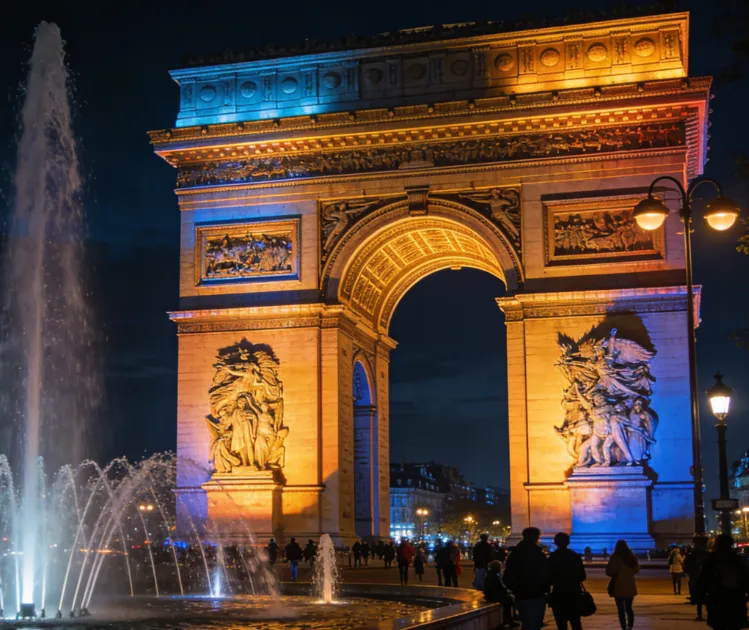
The Arc de Triomphe: Surprisingly Worth the Climb
At first glance, the Arc de Triomphe feels like just another monument — impressive, but easy to skip.
We almost did.
What changes everything is the view from the top.
From here, Paris reveals its logic. You can see the city stretch in a straight line from La Défense through the Champs-Élysées all the way to the Louvre. Suddenly, Paris feels intentional rather than chaotic.
Compared to many Paris attractions, the ticket price is relatively reasonable, and the pedestrian underground passage makes access safer than it looks from street level.
If you only choose one viewpoint in Paris, this is often the one that feels most rewarding for the time and cost.
Champs-Élysées: Iconic, but Not for the Reasons You Think
The Champs-Élysées is one of those places everyone feels obligated to visit — even when they’re not sure why.
In reality, it’s more commercial than charming. Designer stores sit next to familiar global chains, and the crowds rarely thin out.
And yet, walking downhill from the Arc de Triomphe toward the city center, under the wide tree-lined sidewalks, offers a sense of scale that photos can’t capture.
This is not where Paris feels intimate.
This is where Paris feels grand.
Think of it less as a shopping destination and more as a connector between major landmarks.
Montmartre: Magical or Miserable, Depending on Timing
Montmartre is one of the most polarizing neighborhoods in Paris.
On a quiet weekday morning, it can feel like stepping into a painting.
On a Sunday afternoon, it can feel exhausting.
The Sacré-Cœur Basilica offers one of the best panoramic views of the city, but the surrounding crowds often surprise first-time visitors.
If you struggle with steep hills, the funicular helps. But walking up from Lamarck-Caulaincourt station gives you a better sense of the neighborhood’s character and avoids the busiest paths.
Montmartre is best enjoyed slowly, with no fixed schedule. If you try to rush it, the charm disappears.
The Louvre: When to Go — and When Not To
The Louvre is overwhelming. There’s no polite way to put it.
If you go without a plan, you’ll likely leave tired and frustrated, wondering why you didn’t enjoy it more.
The mistake most people make is trying to see everything.
Instead, decide in advance what you actually care about — whether that’s classical sculptures, Renaissance paintings, or simply seeing the Mona Lisa and moving on.
Early mornings or late evenings are far more enjoyable. Midday visits can feel more like crowd management than art appreciation.
The Louvre is not about checking boxes. It’s about choosing a focus and letting go of the rest.
Walking Paris: Where the City Really Shines
Paris is at its best between destinations.
Walking along the Seine, especially in the early evening, offers a version of the city that feels calmer and more human.
Neighborhoods like Le Marais, Saint-Germain-des-Prés, and parts of the Latin Quarter reward wandering without a plan.
This is where you’ll find the cafés, bookstores, and quiet streets that create lasting memories — not the landmarks themselves.
If you enjoy walking, Paris becomes generous.
If you don’t, it can feel exhausting.
Food in Paris: Adjust Your Expectations
Paris has incredible food — but not every meal will be memorable.
The biggest mistake travelers make is assuming any random café will be excellent.
Tourist-heavy areas often prioritize speed over quality. Some of the best meals come from small bistros slightly removed from major attractions.
Lunch menus often offer better value than dinner, and reservations matter more than many visitors expect.
Paris rewards research — but also flexibility.
Is Paris Expensive? A Realistic Look at Costs
Paris is not cheap, especially compared to many other European cities.
Accommodation costs have risen noticeably, particularly in central neighborhoods. Dining out adds up quickly, even without luxury choices.
That said, many of the city’s best experiences — walking, parks, architecture, neighborhood exploration — cost very little.
Paris becomes expensive when you try to do everything.
It becomes manageable when you choose carefully.
Where to Stay: Location Over Luxury
In Paris, location matters more than hotel quality.
Staying slightly outside the historic center but near a reliable metro line often offers the best balance.
Neighborhoods like the 9th, 10th, and 11th arrondissements provide good access without the premium prices of central tourist zones.
If you plan to walk extensively, central areas make sense. If not, prioritize transit connections.
Transportation: Easier Than It Looks
Paris public transportation is efficient once you understand it.
The metro system covers nearly every area visitors need, and walking between nearby stops often saves time.
Taxis and rideshares are available but can be slow during peak hours.
For most visitors, combining walking with metro use offers the best experience.
Who Will Love Paris — and Who Might Not
Paris is not for everyone.
You’ll likely love Paris if:
- You enjoy walking and wandering
- You appreciate atmosphere over efficiency
- You don’t need everything to go perfectly
You may struggle if:
- Crowds frustrate you easily
- You prefer rigid schedules
- You expect constant convenience
Paris asks for patience, but gives back character.
Is Paris Still Worth Visiting?
Yes — but not blindly.
Paris is worth visiting if you approach it as a city to experience, not a list to complete.
The romance exists, but it’s quieter and more complex than movies suggest.
For travelers willing to slow down, accept imperfections, and explore beyond highlights, Paris remains one of the most rewarding cities in the world.